
Lord Christ, give me some of your Spirit,
To comfort the places in my heart where I hurt,
Then give me some more of your spirit
So that I can comfort other people. Terry Waite
You may remember the name, Terry Waite, the human rights activist and author, who was captured in Beirut on January 20, 1987, while working as an envoy for the Archbishop of Canterbury to negotiate the release of other captives. He was freed on November 18, 1991, having spent the first four years of his captivity in strict solitary confinement. If anyone could be said to be an expert on the human effects of isolation, it would be Terry. And yet, even through this experience Terry found spiritual grounding, he experienced the Holy Spirit as a quiet, steadying presence.
Last Sunday was Pentecost, when we recalled Jesus’ disciples experience of God’s spirit, in Acts 2: “They saw what seemed to be tongues of fire that separated and came to rest on each of them. All of them were filled with the Holy Spirit and began to speak in other tongues as the Spirit enabled them”.
The “tongues of fire” could be said to be a deeply personal experience for Jesus’ friends, and yet the spirit also enabled them to reach out to others, “in other tongues as the Spirit enabled them”. From this we can conclude that an experience of the spirit is far more than a “spiritual comfort blanket”. Although there are times when we might need that, the spirit also brings us together; the spirit is connection and is the breath of love which breathes through all of creation.
The other thing that the spirit of God represents is freedom. Something which I imagine was a great spiritual support to Terry Wait during his imprisonment. Pentecost Is the occasion when Jesus’ disciples found a new sense of freedom and purpose in their faith and in their mission. The spirit also speaks to us of God’s freedom: we’re reminded that God cannot be completely defined. Despite our best efforts to contain God within our belief system, or even within the Biblical texts, God is free, and we, as God’s children, can experience the same freedom when we open ourselves up to the untamed spirit of love; a love which is deeply intimate, like those “tongues of fire”, but also wild and free, a mystery in the sense that the spirit continually opens us up to new questions and new understandings, and yet can be discerned when love is at the centre of our being.
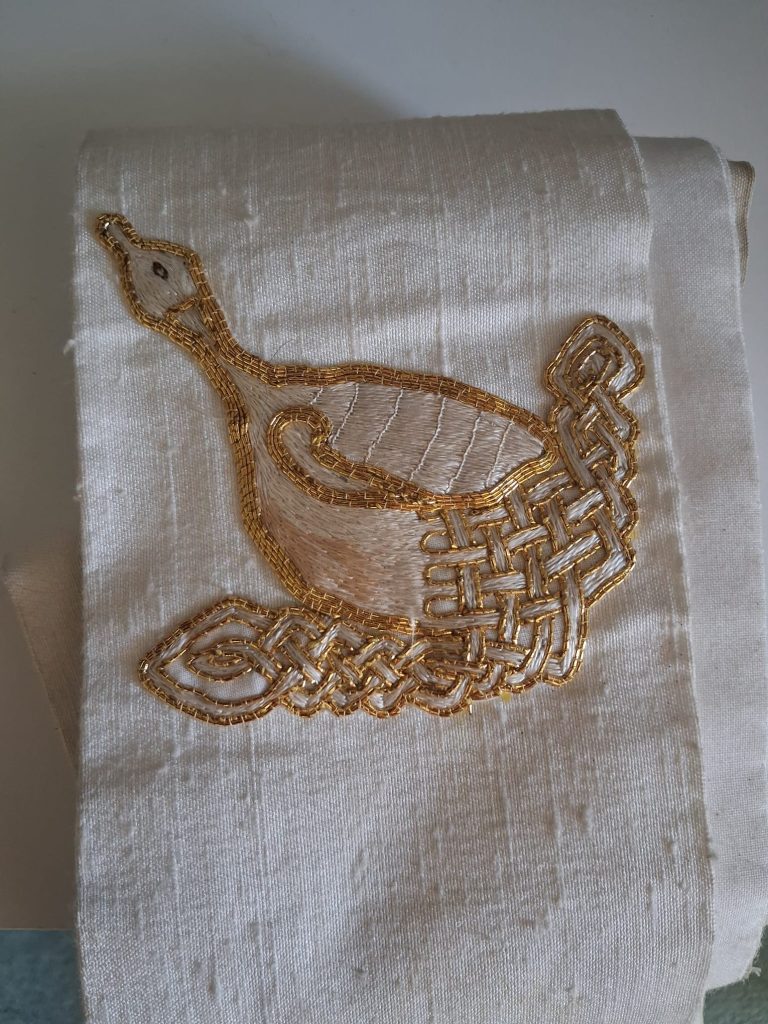
So, why the picture of the bird? Well, that is a Wild Goose, which is an ancient Celtic symbol of the Holy Spirit, A Goose is not serene like a Dove; a Goose flies in, flaps around, and creates a mess, it turns things upside down. Geese also protect each other, if one becomes too weak to fly, at least two others will land with it and remain by its side until it is able to fly again.
They live in community, and yet also respect individuality, and differing needs. For the individual Goose there is no pressure to fit in with what the others are doing, because they know that they belong. How often do we worry about fitting in, or doing the right thing? But the Holy Spirit confirms that whatever our differences, we belong, just like all those people in the crowd who heard what the disciple’s were saying, each in their own tongue. Like the Wild Goose, like God, we are intended to be free.
