Ketton and Tinwell Benefice

KettonAndTinwellBanner3


Welcome to St. Mary's Ketton & All Saints Tinwell
We are an inclusive & friendly Church Family
in the beautiful county of Rutland
Please drop by and see us

Whoever you are, whatever you think or feel, believe or don’t believe, you are welcome

Both our Churches are open everyday for you to explore or for personal prayer

Our Vicar

Revd Dean Akrill

Email:vicar@kettonandtinwell.uk

For a weekly email with all the latest news please contact Dean. 

Telephone: 01780 723181

Mobile: 07521 163745

Dean is here for the whole community in Ketton and in Tinwell, so please don’t hesitate to get in touch. Dean’s day off is Monday 

Our Church Wardens

Ketton Sara Mann  saramann50@gmail.com

Tinwell Bryan Yule bryan.yule766@gmail.com

Our Pastoral Lay Minister

Julia Freeman juliafreeman@tiscali.co.uk

Recent Blog Posts

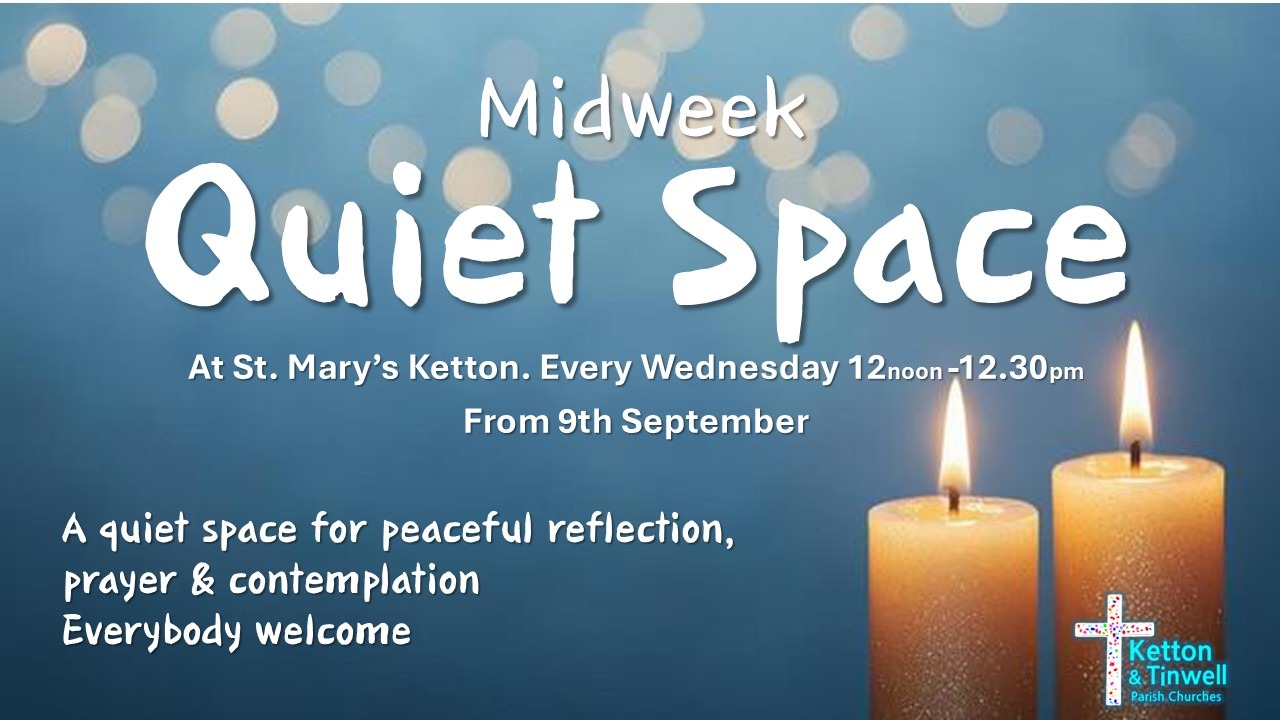
02/09/2026Take some time out from your day in this relaxed space for peaceful prayer & reflection, beginning on Wednesday 9th September. Everybody welcomed and affirmed, whoever you are, whatever you believe or don’t believe. 12 noon – 12.30pm at St. Mary’s, ketton. Following the first session there will also be a short, informal communion service for those who wish to receive. X Exit full screen gallery ⇗ Open full size image → Next image 0 of 0 ← Previous image [...] Read more...
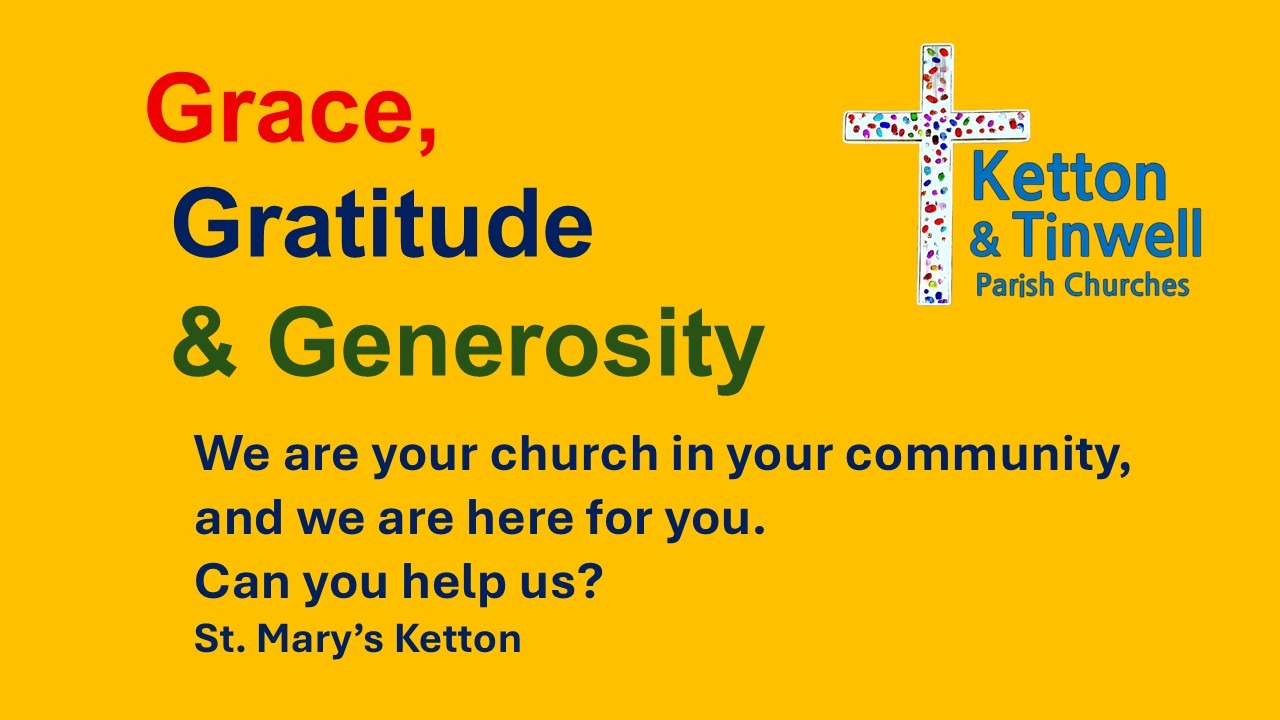
26/08/2026https://kettonandtinwell.uk/wp-content/uploads/Ketton-Giving-Film.mp4 What would we like to do? We’d like to build on what we already do, to grow in faith, in compassion, and in number. We’d like to make our building more accessible and flexible, without losing its beauty. What do we need to do? Offer time, skills and talent  If we are to continue to grow and be a visible and present church in our community, we need people to volunteer their time, skills and talents, especially if we also want to do new things, such as the Christmas Festival we have planned in December. What you can offer is up to you. You might be good at practical maintenance, or making tea, you might sing or play a musical instrument, you might be creative in the visual arts or good at technical things such as operating our sound system. You might be good at baking cakes, welcoming others, or stacking chairs. It could be that you like working with children or with older people. You might even like to sit on committees! The opportunities are many and varied. Raise our financial giving   Like everybody, we need to pay our bills and maintain what we already have. So, our financial giving is very important.  The cost of keeping the Church open is likely to hit £28,600 this year. In addition to this we pay something called “The Parish Share”, which contributes to the cost of the ministry we receive from our clergy.  Previously this has been set at £29,000 a year, but because we now have a full-time Vicar this figure will increase significantly.  This will mean the combined costs to open the church will rise to a minimum of £1,800 a week – an increase of 63%.  All of this is before we contribute to our charity partners or consider any extra spending. Whilst our reserves will help us meet this in the short term, we urgently need to increase our regular committed giving. We know that the subject of money can be sensitive, and we don’t expect anybody to give more than their means allow, but any contribution will be greatly valued and appreciated. Why do we give?   Whether we give of our time or with our money, we do so out of grace, gratitude and generosity, in response to the love and generosity we have received from God. In times gone by, the Church expected people to give 10% of their income, which they generally did. Today we give what we can, with a thankful heart. “Each of you should give what you have decided in your heart to give, not reluctantly or under compulsion, for God loves a cheerful giver”  2 Corinthians 9:7 How do we give?  If you would like to volunteer or offer a particular skill or  talent, please talk to our Church Warden, Sara Mann – saramann50@gmail.com, or Revd Dean – vicar@kettonandtinwell.uk. Also look out for opportunities throughout the year. If you would like to give financially, the easiest way is to give through the Parish Giving Scheme. This collects your regular donations by Direct Debit.  If you pay tax, you can also increase the value of your gift through Gift Aid, so for every £1 you give, PGS is able to pay the church an extra 25p which it reclaims from the HM Revenue and Customs. Giving by this method also offers you the option to give anonymously. If you’d like to choose this option, please visit the Giving Page  For further help and other ways to give you can contact our Treasurer, Richard Dixon, rdixon.ketton@outlook.com. You may also wish to consider leaving a legacy in your will. Whatever you decide to do, thank you. Revd Dean Akrill X Exit full screen gallery ⇗ Open full size image → Next image 0 of 0 ← Previous image [...] Read more...
07/08/2026  “For my part, I know nothing with any certainty, but the sight of stars makes me dream” Vincent Van Gough I’m a perpetual dreamer; I always have been. At school I was often told to “wake up”, as I drifted away, thinking of something that I thought more interesting than whatever the lesson was about. Actually, I’m a dreamer in all senses of the word, I sometimes have weird dreams at night, but I also dream about how we can make the world a better place. In that sense, a dream can be positive thing. The thing about having a dream, is that it requires space and time to bear fruit, and there seems to be precious little of that in today’s world. The world is full of noise, with many different voices, each shouting to make themselves heard, and each of them certain about what they are shouting. It’s easy to feel overwhelmed by this, we can feel caught up in a storm. Each of us is caught up in our own individual storm of life anyway, so the extra noise doesn’t help. Sunday’s Gospel reading, from Matthew 14: 22-33, finds Jesus’ disciples in a boat, caught up in a storm, and they are overwhelmed by it.  Jesus, who had been spending some time in prayer and contemplation, is alerted to their plight, and famously walks across the water towards them. Peter, who is now overwhelmed by the sight of Jesus, attempts to walk over the waves to be closer to Christ, but sinks, due to his lack of faith. Once back in the boat, the storm is stilled. Sometimes the storm of life threatens to sink us, and in such times, I think the message of this passage is clear; God is with us, even in the storm. So, have faith, and continue in the way. However, being in the storm is tiring, so whilst there is a time to engage with the storm, there is also a time to rest, perhaps even a time to dream, a time also to be simply aware of the still, calm presence of the Divine within the storm. Many of us find that contemplation and meditation is helpful in calming the storm of our lives.  Perhaps you might find it helpful at times to find a quiet place, to sit still, and to breathe gently and slowly, surrendering your anxiety. You may wish to focus on a passage such as “Be still and know that I am God” – Psalm 46:10; repeating this simple phrase, followed by short periods of silence. The idea is to be immersed in the awareness that “God is God”, the calm centre in the midst of the storm. As I mentioned above, the storm is made up of many different voices, and undoubtedly some of them are religious, each insistent about what we should believe, and how we should believe, all of these voices in apparent competition with each other. We sometimes forget that faith is not always the same thing as certainty, and that Jesus revealed the way to live and to follow, rather than a list of certain beliefs which must be ticked off at all costs. Sometimes as Christians we can be so concerned with the details of belief, that we end up neglecting the way of love. With this in mind, in October there will be an opportunity to explore faith in a way which is open-ended, and which, as well as discussion and study, will involve contemplation, meditation, and possibly some dreaming, to discover God in the midst of the storm. Love, Joy and Peace will run through October. More details on our News Page  X Exit full screen gallery ⇗ Open full size image → Next image 0 of 0 ← Previous image [...] Read more...
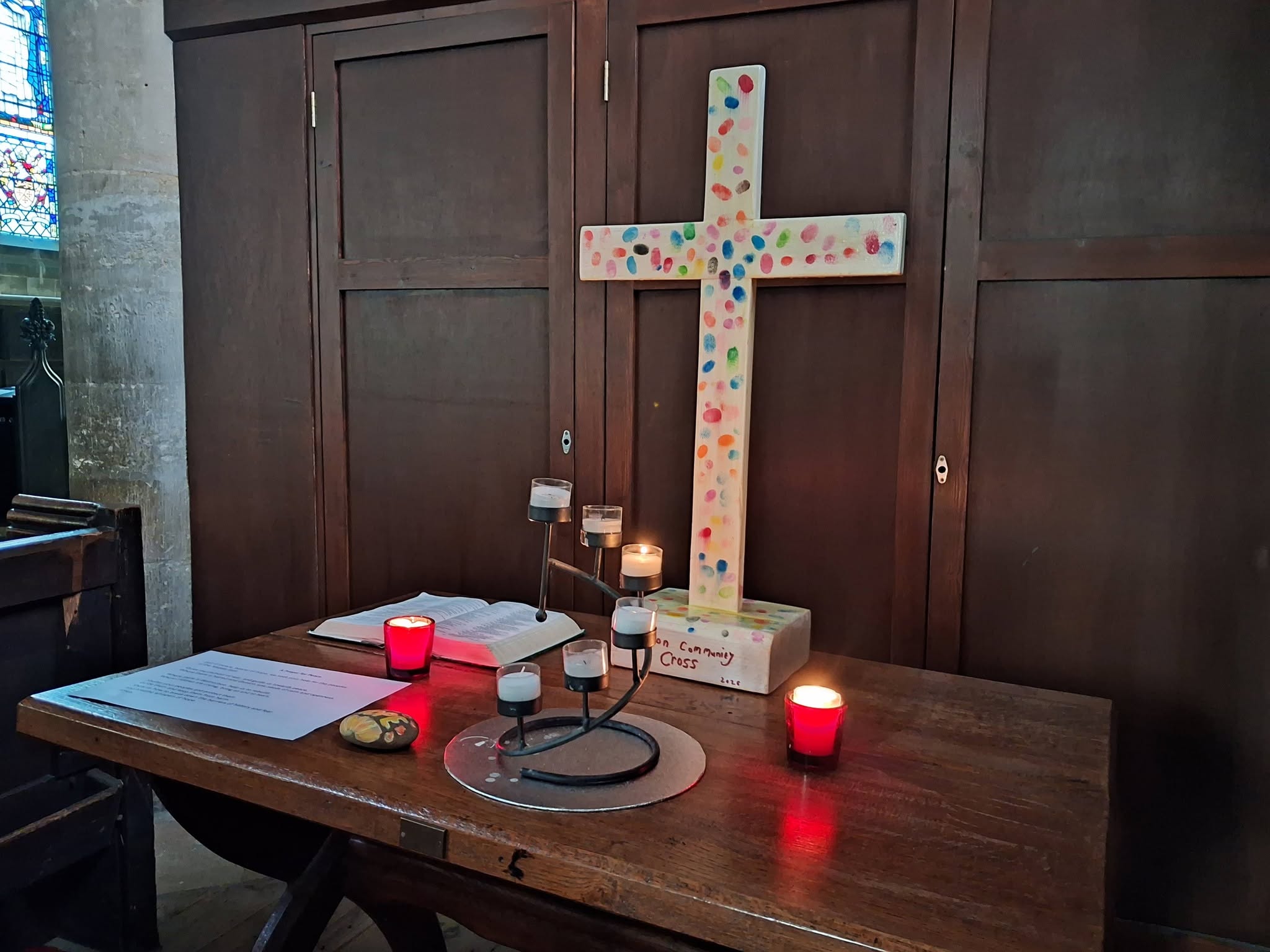
24/07/2026What is the Church? That might seem like an odd question to ask, but the Church can be many things. It can be a place to worship, to pray, to meet with people or even to a place to find solitude. The Church can be a place to get married, to be christened, or say goodbye to a loved one. For some of us, the church is where we learn about faith, or where we bring our doubts and questions. For others, the church is simply a remote institution which can seem a bit irrelevant or judgemental. The church can be viewed as the building, or as the people, as God’s house, a sacred space, or simply a gathering place for the faithful. For others, the church is the “heart of the community” which, as well as having a social and spiritual function, tells the story of the people in that place, as well the building itself. The church can also be a movement, or a campaigning group, a catalyst for change. I think the church is all those things, and more, but there is another aspect of the church, which is prominent in my mind at the moment, the church as “sanctuary”. In this sense, the church is both a holy space and a social refuge, it offers spiritual shelter and practical protection. Perhaps Sunday’s Gospel reading helps us to think about the Church as “sanctuary”: He told them another parable: “The kingdom of heaven is like a mustard seed, which a man took and planted in his field. though it is the smallest of all seeds, yet when it grows, it is the largest of garden plants and becomes a tree, so that the birds come and perch in its branches.” Matthew 13: 31-32  The tree in this story provides refuge for the birds, and of course, the tree doesn’t choose which birds are welcome to perch on its branches, all the birds are welcome. In this story the church serves as a glimpse of the kingdom of heaven, which is inclusive, non-judgemental, and provides a safe space for all, not just the members of a specific “Christian Club”.  The other thing to mention is that the tree grows from a small seed. Perhaps we are the “seeds” from which the church can grow. We all have a small part to play, but our church cannot exist without us. Do you need a quiet space? A place of “sanctuary”? Both our churches are open every day for you to explore, or for personal prayer. Also, at St. Mary’s, there is a small selection of spiritual books for you to look at. X Exit full screen gallery ⇗ Open full size image → Next image 0 of 0 ← Previous image [...] Read more...
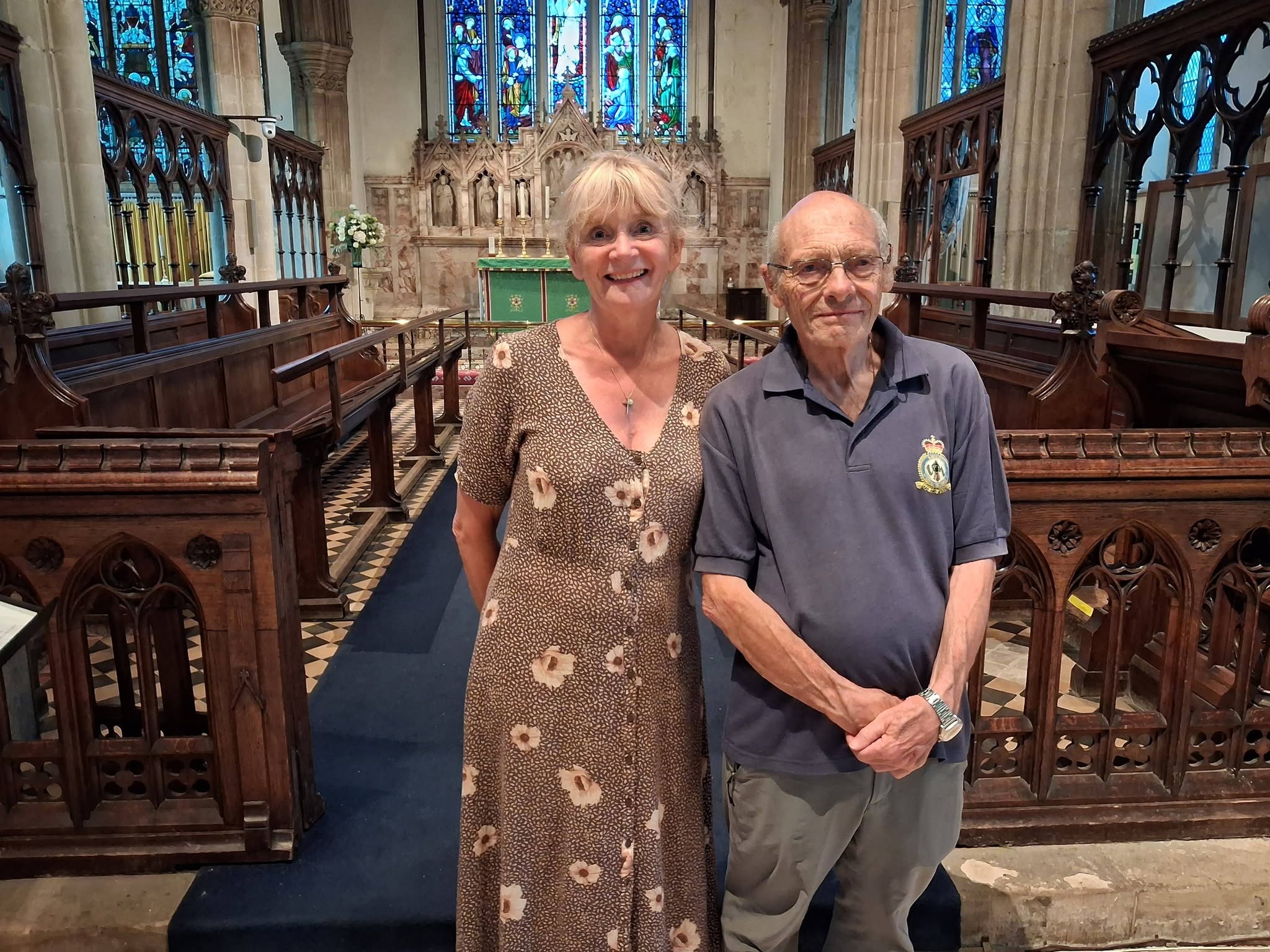
16/07/2026We had a joyful service at Oakham on Wednesday for the admission of Church Wardens, who are elected every year and have primary responsibility for the upkeep of our Churches. The service was conducted by our Archdeacon, Revd Canon Alison Booker. Please pray for our own Wardens, for Sara Mann (Ketton) and Bryan Yule (Tinwell), as they take on this important role for another year. X Exit full screen gallery ⇗ Open full size image → Next image 0 of 0 ← Previous image [...] Read more...
11/07/2026I’ve had a lot of nice comments about last week’s Pet Service, many of them from people who don’t usually attend St. Mary’s. I hope that this Sunday’s Pet Service in Tinwell also manages to reach people we don’t often see. Pets are very good for teaching children how to love and care for a living thing, and the relationships we form with our pets remind us that love isn’t limited to our own species, we can form a deep connection with our pets. Our pets remind us that we are deeply connected to all of life. The American Trappist monk, poet, and social activist, Thomas Merton, wrote “the true self should not be thought of as anything different from life itself”. Interesting, but what is this “true self”?  Fortunately, Merton provides an answer, “Love is the reason you were made, and love is who you are”. This, I think, is what we mean when we say that we are “created in the image and likeness of God”. Love can be hard work, through love we feel things more deeply, this opens up our souls to the world and to each other, we experience joy, but also pain, more deeply. No wonder we’re often tempted to create divisions, not least within ourselves. But we know that creating these divisions ultimately leads to loneliness, or even worse, to conflict and disconnection from our world, and ultimately from the God who is love, as well as from “our true selves”. On Sunday we’ll be looking at the Parable of the Sower, a story which has multiple meanings for us, and perhaps one of them is this, “we reap what we sow”. Do we sow love and grace? Or do we sow something else? The answer is the choice between recognising and creating heaven on earth, where we build connection and recognise that “love is who we are”, or simply just waiting for our own personalised heaven at the end of our days, which, in my opinion, sounds a bit boring, is definately a waste of all that love, and ironically, places us in danger of losing our true self, which is life itself.  Perhaps that’s the reason we keep pets; through them we catch a glimpse of heaven. X Exit full screen gallery ⇗ Open full size image → Next image 0 of 0 ← Previous image [...] Read more...
03/07/2026This Sunday, some of us will be attending the Pet Service at St. Mary’s, others will be at the Communion & Memorial Service at All Saints, perhaps you’re on holiday and will be walking in the open air instead. The one thing we’ll have in common is that all of us will be accompanied by God, even if we’re not really aware of God being there. Sometimes It’s really hard to see God, or even to imagine God, especially if we are overwhelmed by the suffering in our world, either past or present. I imagine this is particularly true during times of war.  In Tinwell we’ll be recalling the night of July 8th 1944, when a tragic-mid air collision occurred. Two USAAF C-47 Skytrains  carrying Polish troops collided during a training exercise, killing 26 Polish paratroopers and 8 American airmen.  We’ll be remembering them on Sunday, as well as praying for peace in our world.  That night during World War II marked a particular crisis which has left an indelible mark on communities in Poland and America, as well as here in Rutland. However, all of us go through times of crisis, when God is hard to see. There was a time in my life when I couldn’t see God for all the trees and the people.  Don’t get me wrong, I was a Christian and had been for quite a long time. I said and did all the things I was supposed to, but God simply didn’t seem to be there anymore. All I could see were people, lots of people, all of them different, all in need of love. Could I love them as I was told God did?  I wasn’t really sure. Then one day, I came across a small book called Mr God, This Is Anna. Its quite an old book now, and a bit quirky in its way. But within the pages of this book, I found something of the beauty of God and of humanity in a way I hadn’t realised that I’d needed before; I realised also, that I’d never have all of my questions answered. But sometimes the questions are more important. Mister God, This is Anna, is a true story about an unusual friendship that developed between a small girl, Anna, and Fynn, a young man, who found her late one night sitting outside a baker’s shop in London’s dockland. She’d run away from her parents who had been abusing her. Anna was determined not to return to them and refused to say where she lived. Fynn took her home where his large-hearted mother took her in as her own. Anna knew the darkness at the heart of humanity, but behind her tear-stained eyes, Fynn and his mother could see a blaze of light. Anna had an amazing capacity to love the things she’d discovered in the world and wasn’t afraid to ask questions. Anna knew that God was very big, but she also thought that God was very small; “If he couldn’t be little, how could he know what it’s like to be a ladybird?”  And why do people have fights and wars and things?  “Because everybody has got a point of view, but Mister God has only points to view.” Humanity in general has an infinite number of points of view, whereas Mister God has an infinite number of viewing points. This means that God is everywhere. Mister God is different because he can know things and people from the inside, too. We only know them from the outside, and “In whatever state you understand Mister God you diminish his size”. God is larger than the universe, larger than any of our ideals, but yet God can still be seen in the face of a small child, an old man, a grieving widow, or perhaps even your pet dog. For Anna the whole reason for living was to try to understand more about Mister God and his world, despite the fact that we’ll never know everything.  And, even more importantly, to love as Mister God loves, appreciating the infinite number of viewing points, even if we can’t see them ourselves. If you’d like a bit of summer reading, I can’t recommend this book enough. X Exit full screen gallery ⇗ Open full size image → Next image 0 of 0 ← Previous image [...] Read more...
26/06/2026Grace finds goodness in everything (Bono – U2) Grace is probably my favourite religious word. If there’s anything that the world needs more of, it’s grace. It can be difficult to be gracious and very easy to hold a grudge, and I think that sometimes we focus too much on the ugliness around us and forget to focus on beauty. In fact, sometimes we imagine we see sin, when in fact there is love and beauty. My least favourite religious word is probably “sin”, which is ironic, because there are a great number of people who believe that the Church is obsessed by sin, and sometimes, they’re right. Occasionally Christians can give the impression that God works as some sort of cosmic administrator ticking off a list of sins on a massive checklist. So, what is grace, and what is sin? I’ve heard it said that grace is “the thing that pulls you through the darkness to the other side.” Grace is the thing that you need most when you’re feeling ugly or unforgivable. Grace be a cup of tea. Grace can be a quiet word or something best left unsaid. Grace can be a massive hug, or a respectful distance. Grace is Jesus with his arms outstretched on a cross, as if to say, “I love you this much”. Grace can be any number of things, but it is always rooted in love. What is sin? Before Jesus came along people followed a list of laws, rules and commandments which instructed them on what God considered sinful, perhaps they imagined God had a massive checklist. However, Jesus said that the law hung on two simple principles “to love God and to love one’s neighbour as oneself”.  In doing this Jesus effectively tore up that checklist; sin is simply anything which doesn’t look like love. Love and grace remain the same, but it’s not always easy to categorise sin.  Here’s an example: for many years the Church refused to marry divorced people because Jesus implied that divorce was sinful. However, if we look at the time and place in which Jesus lived, we discover that divorced women were effectively left in the gutter, they had nothing left and no-one to help them. Obviously, this does not look like love. Divorce was a sin because it was destructive of the woman’s well-being; Jesus was being both loving and gracious. Today however, in our culture, divorce can look like love, especially if there’s been a history of mistreatment or unhappiness. In our case, we are right to say that divorce isn’t sin, because if we know someone trapped in a bad marriage, the loving and gracious thing for us to do is to affirm the decision to divorce and help them to enter new, healthy and loving relationships. This is a relief for me, because I not only conduct weddings for divorcees, but I’m also married to a divorcee! Because of the spirit of love and grace, God accepts us.  There is no need for us to feel guilty, or unclean, or unloved, nor is it up to us to carry a new checklist, either for ourselves or for others. Sin is not necessarily cast in stone, but we can see what doesn’t look like love. And when we do need forgiveness, “grace finds goodness in everything”. If you’d like to hear the song “Grace” by U2, visit: Revd Dean Akrill X Exit full screen gallery ⇗ Open full size image → Next image 0 of 0 ← Previous image [...] Read more...
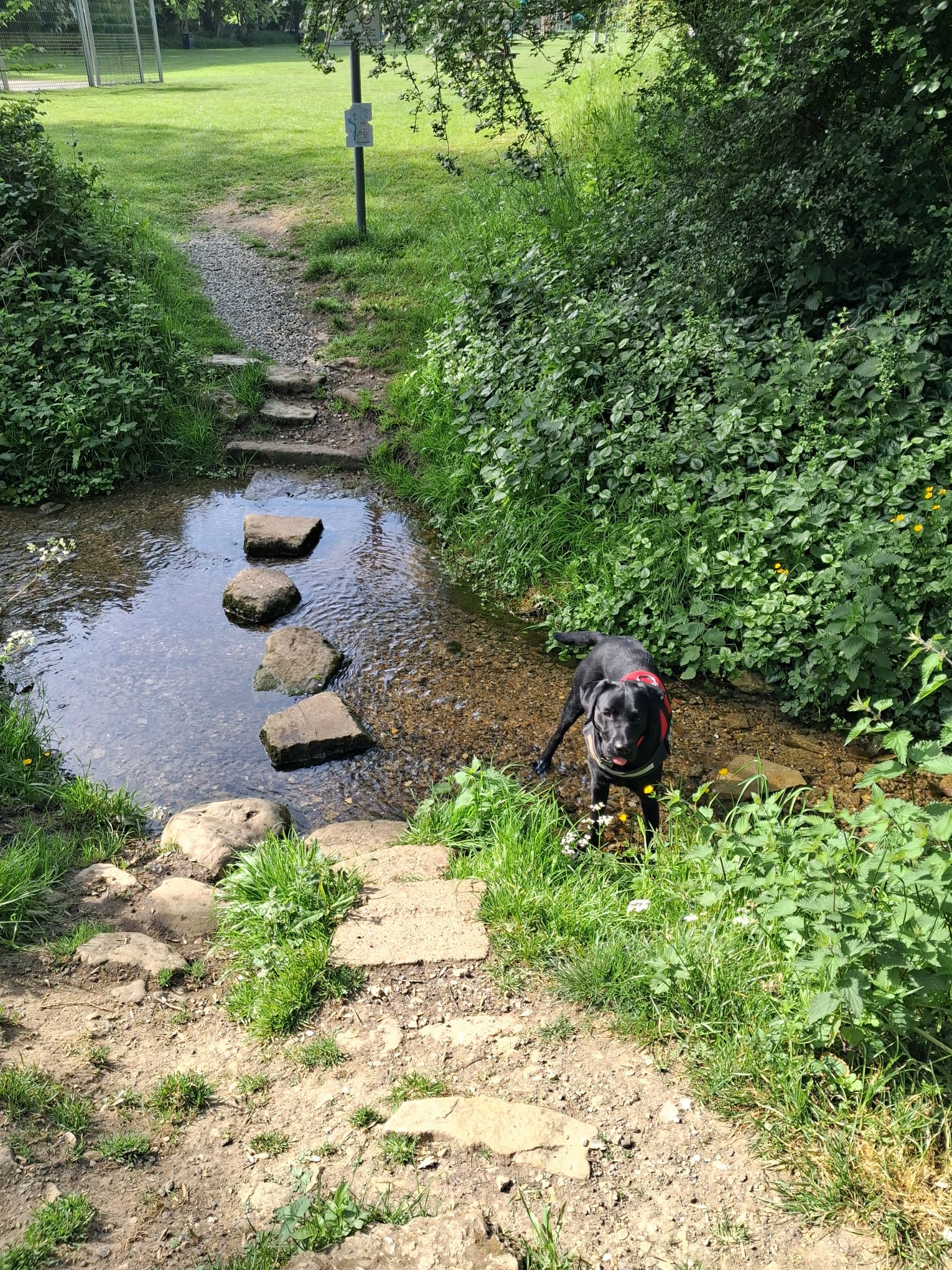
25/06/2026Blimey, it’s hot!!!!! You might have noticed this. So, all the usual advice, stay cool, stay hydrated, and perhaps go for a paddle, like Humphrey here. The sun is a great blessing, essential for life. But this great heat is also a reminder to us that we need to care for our earth as we care for each other. May we be aware of our blessings, and also of our responsibilities. X Exit full screen gallery ⇗ Open full size image → Next image 0 of 0 ← Previous image [...] Read more...
12/06/2026In July, we’ll be thanking God for our Pets, and all God’s creatures. All are welcome to our service for all ages and all species. Please come along with (or without) your furry friends. Both our Churches will be joining in. Ketton on 5th July at 10.30am. Tinwell on 12th July 3pm. X Exit full screen gallery ⇗ Open full size image → Next image 0 of 0 ← Previous image [...] Read more...
05/06/2026This Sunday is the Ketton Green Festival, a reminder that the earth is fragile and needs protecting and a challenge for us to live more sustainable lives.  On a spiritual level, perhaps this Festival, and others like it, affirm that we are interconnected with the natural world, as well as with God and each other. In the past this was taken for granted, both All Saints and St. Mary’s have carvings of a Green Man, that haunting image of a human face with foliage sprouting out of the mouth. But as society began to distance itself from the natural world, many forms of religion followed. As industrialisation brought with it the exploitation of natural resources, many expressions of faith forgot that the earth too is made in God’s image. However, not all religious organisations followed this path, for many monastic communities, our relationship with the earth is still fundamental. Hugely influential for me over the years has been St. Francis of Assisi, the 13th century Italian Monk for whom the call of the Gospel led him to live in simplicity, in harmony with nature. In fact, he considered humanity to be in kinship with the whole of creation. Francis’ most famous piece of writing, “The Canticle of the Sun” speaks of “Mother Earth”, “Brother Sun” and “Sister Moon” all in praise together. However, how can we be expected to live in harmony with the earth if we cannot live in harmony with each other? The divisions which exist amongst us today not only result in violence towards each other, but also violence towards Mother Earth because she suffers the wounds of our conflicts. I believe that Jesus came to bring healing to all our relationships. As well as expressing closeness to the “Lilies of the fields”, Jesus demanded that the poor be fed, the stranger welcomed, and that people who are deemed “untouchable” be blessed and affirmed. In our world today there are many people who are considered “untouchable” or “unnatural” to others, and recently we have seen an increase of violence on people because of their ethnicity, social status, age, ability, disability, gender or sexuality. This month is Pride Month, when many LGTBQ+ people and their allies will take a party to the streets; a reaction to and a protest against the abuse inflicted upon them by others, whether it be physical, psychological, institutional or spiritual abuse. I think that people of faith are called to take notice of the natural environment and the abuse inflicted upon it, as well as listening to the voices of all people who have been abused. Whatever the voices of division in our world may say, we are all interconnected. Perhaps today, we, like St. Francis, can hear the call of the Gospel to reaffirm our kinship with Mother Earth and all her people. To heal, bless and affirm as Jesus did. Revd Dean Akrill   X Exit full screen gallery ⇗ Open full size image → Next image 0 of 0 ← Previous image [...] Read more...
29/05/2026What does it mean to be human? Or, perhaps I should ask, what does it mean to be a person? I ask this, because it is a fundamental question which is perhaps more important now than ever. From a philosophical perspective, personhood is often defined by self-awareness, but of course, this definition has its limitations, not all people are fortunate enough to be self-aware. Perhaps then, we could say that a person possesses recognized rights, protections, and moral worth. That’s better but still a bit clinical for my liking. With Artificial Intelligence becoming ever more sophisticated, and perhaps even, self-aware, there are reports coming through of people having human-like relationships with AI, and if that is so, how do we define “moral worth”? This is further complicated by issues of human rights and employment rights. Young people are struggling to find jobs, so is it ethical or moral to hand jobs over to AI? I would suggest not, but as AI becomes more sophisticated, the more difficult the problem becomes.  This poses another question, just because we might be able to create consciousness, is it actually a good idea to do it? I’m not an expert on AI.  But I do think that human beings hold a “divine spark” within them, something unquantifiable, perhaps this is better known as a “soul”. There is something mysterious about the lives of humans, even humans we know quite well. if we look at old photographs of our parents or grandparents, taken before we were born, they can seem like strangers to us because they had a whole different life which we weren’t part of, they seem familiar but also quite remote. In the same way, God is both intimate and mysterious at the same time.  This is something we are reminded of on Trinity Sunday. Christians believe that God is known in three ways, as Father, Son and Holy Spirit. Perhaps another way of saying this is that there are different ways of relating to the same God.  So, we can relate to God as Parent or Creator, intimate but yet remote and mysterious – God beyond us. We can experience God through human hands, as God with us – revealed to us most perfectly through the life and love of Jesus Christ, but also in the life and love of those around us.  And we can experience God as Spirit – both within us and around us. God requires these three different aspects to be whole, which can be understood as being, as consciousness. God as well as being the Divine exists in relationship with the Divine. And humanity, as well as living in relationship with each other, live in relationship with God, or as it is sometimes understood, God is “the ground of our being”.  In this sense we are part of the Divine, as is the natural world. God is relationship and consciousness, and so, if we introduce another relationship and another consciousness, one made by our own hands, what does this do to us? What does this do to God? This, of course, depends on what we do with AI and how we allow it to develop, but I think there is a danger that in taking on the role of God we create something which could be described as a soul, or even another God, and what then? Answers on an old-fashioned postcard please… Revd Dean Akrill X Exit full screen gallery ⇗ Open full size image → Next image 0 of 0 ← Previous image [...] Read more...